
Commercial Roofing
The best flat roof materials offer longevity, strength, and protection. Here is a detailed outline of multiple roof membranes, which helps you compare the most popular structures.
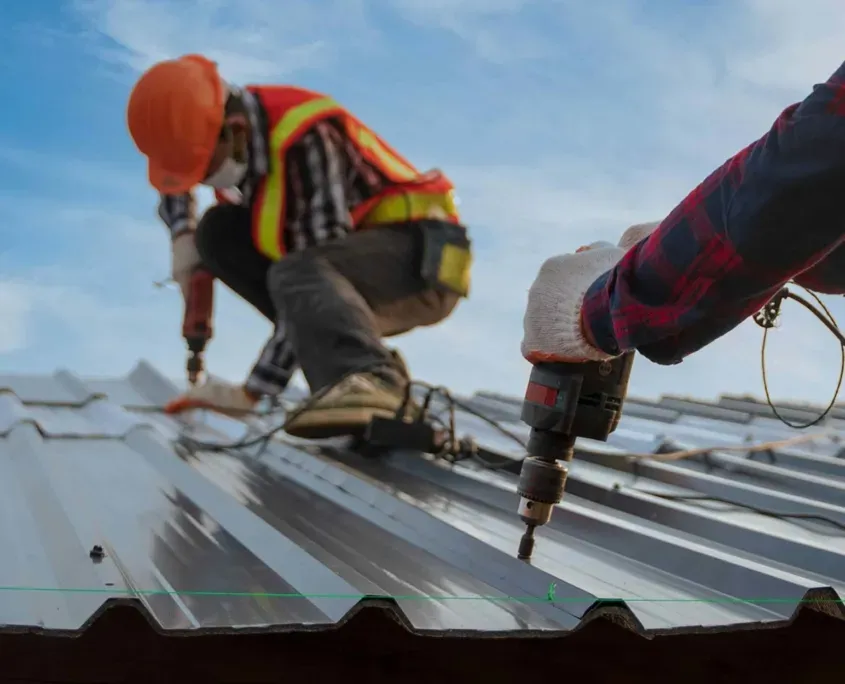
Contrary to its name, flat commercial roofs aren’t flat. Also known as low slope roofs, flat roofs’ slopes are angled between 1 and 10 degrees. The slight slope of a flat roof is equivalent to ¼ to ½ inch per foot. This allows water to run off, which keeps it from damaging the surface. To remain watertight, flat roofs are built with different synthetic materials made of durable plastic, rubber, or metal. While Standard slope roofs typically have overlapping shingles, flat roofs are monolithic, meaning the membrane is made of large sheets of material that cover the roof’s surface from end to end. Flat roofing is used on commercial buildings all over the world. Many are also energy efficient and versatile, available in different types of roofing materials:
Although there are several advantages of flat commercial roofing, there are also a few drawbacks. For one, exterior penetrations, including pipes, chimneys, and HVAC equipment, cause leaks if they aren’t sealed correctly. Additionally, flat structures are prone to punctures from tree branches and falling objects; this is especially true for rubber roofs. A downside to metal roofing is its susceptibility to leaks around the seams and roof edges. The good news is that most, if not all, issues are avoidable. When they do arise, it’s not until later down the road. That’s why property owners are recommended to hire professional roofing contractors to complete inspections, installations, and ongoing maintenance and repairs. Hiring non-professional or inexperienced people to work on your roof is not only dangerous, but it also wreaks havoc and causes costly damage on your roof’s surface if procedures are done incorrectly.